Address: 21660 W Field Pkwy, Suite 301, Deer Park, IL 60010

Why Ketamine is Changing the Landscape of Fibromyalgia Care
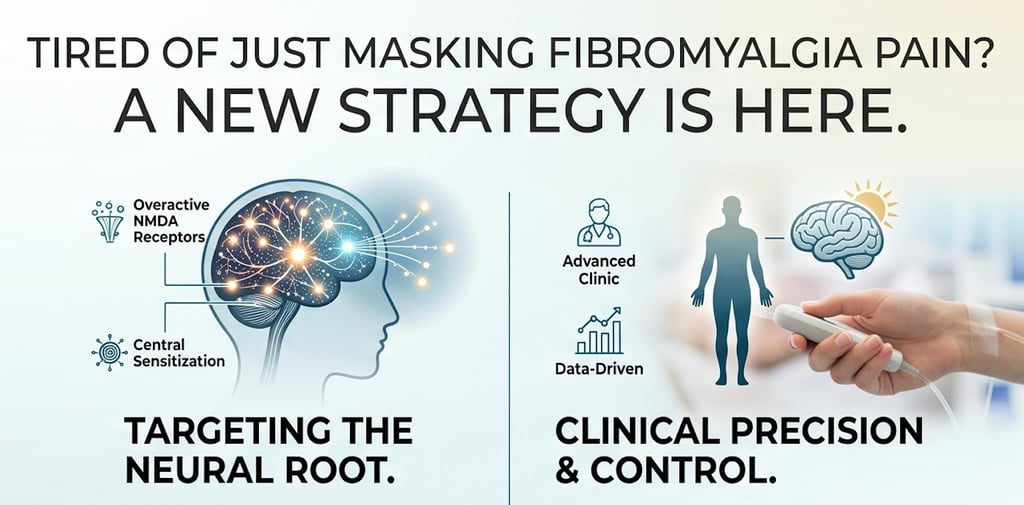
Tired of Just Masking Fibromyalgia Pain? Living with fibromyalgia often feels like fighting an exhausting, invisible war against your own body. If you’ve cycled through standard prescriptions without success and are tired of simply covering up symptoms, it’s time for a new clinical strategy. Instead of just chasing peripheral pain, IV Ketamine Therapy targets the actual physiological roots of chronic conditions inside the brain: Blocks Overactive Receptors: Directly addresses NMDA receptors to interrupt chronic pain signaling. Quiets the Neural Noise: Directly targets central sensitization to calm an overhauled nervous system. Restores Communication: Helps rebuild healthy neural pathways so you can finally reclaim control over your body. Take a data-driven, patient-centered step toward lasting relief. If you are ready for a strategy focused on long-term healing rather than temporary fixes, reach out to New Hope Ketamine clinic today to explore an optimized ketamine infusion protocol tailored to your journey.
6/22/20267 min read

Why Ketamine is Changing the Landscape of Fibromyalgia Care
For millions of people worldwide, living with fibromyalgia feels like being trapped in a body that has forgotten how to experience comfort. Imagine waking up every day with a profound, bone-deep exhaustion, accompanied by an aggressive ache that migrates from your shoulders to your lower back, then to your hips, without any physical injury to account for it.
Traditional medicine has historically struggled to provide answers for fibromyalgia. For decades, patients were shuffled between specialists, handed a prescription, for anti-seizure medication, or worse, told that their pain was "all in their heads."
The underlying reality is that fibromyalgia pain is very real—it is just not occurring where people think it is. It is not an inflammatory issue in the muscles or joints; it is a profound glitch in the central nervous system.
With standard treatment protocols showing delayed onset and limited efficacy (Jones et al., 2024), a growing contingent of medical researchers and specialized clinics are shifting their focus toward a groundbreaking alternative: Intravenous (IV) Ketamine Therapy.
By targeting the root neurological pathways that generate chronic pain, low-dose ketamine infusions are offering what traditional pharmaceuticals rarely can: an opportunity to reset an overstimulated nervous system and provide lasting, systemic relief.
Understanding the Glitch: What is Central Sensitization?
To understand why traditional painkillers fail to treat fibromyalgia, it helps to look at how the brain processes pain. In a healthy nervous system, if you stub your toe, a localized pain signal travels up the spinal cord to your brain. Your brain registers the injury, sends a brief inflammatory healing response, and the pain fades as the tissue repairs itself.
Fibromyalgia flips this system completely upside down. It is widely characterized by a phenomenon called central sensitization—a state in which the central nervous system becomes stuck in a hyper-reactive loop.
Instead of accurately filtering sensory information, the brain amplifies every input. Under the influence of central sensitization, a gentle touch can feel bruising, a mild change in temperature can trigger full-body chills, and the baseline background noise of the body is interpreted as severe, widespread pain.
This neurological state is often triggered by prolonged physical overexertion, severe emotional trauma, or chronic, unmanaged stress. Over time, the brain becomes overwhelmed, and its
Non-pain gating mechanisms break down, because the same neural networks and chemical messengers that govern pain also control our sleep cycles, energy conservation, and mood regulation. That’s when the entire system collapses into a familiar triad of symptoms (Pastrak et al., 2021):
● Widespread Musculoskeletal Pain: Persistent, migrating discomfort that impacts both sides of the body, above and below the waist.
● Fibro Fog: A distressing cognitive haze marked by memory gaps, poor concentration, and difficulty processing verbal instructions.
● Profound Exhaustion: Because the overstimulated nervous system cannot drop into deep, restorative REM sleep, patients wake up feeling just as tired as when they went to bed.
Traditional treatments like nonsteroidal anti-inflammatory drugs (NSAIDs) or over-the-counter
painkillers target peripheral tissue inflammation, but because fibromyalgia isn't an issue of tissue damage, these medications do virtually nothing.
The Molecular Reset Button:
How Ketamine Targets the Brain If the central nervous system is stuck in a pathological loop, how do we break it? This is where ketamine enters the picture.
At a molecular level, central sensitization is heavily driven by the overactivation of
N-methyl-D-aspartate (NMDA) receptors in the brain and spinal cord. When these receptors are constantly bombarded by an excess of glutamate—the brain's primary excitatory neurotransmitter—it creates a "wind-up" phenomenon that aggressively amplifies incoming pain signals (Connolly et al., 2015).
Ketamine acts as a potent, noncompetitive NMDA receptor antagonist. When administered in precise, subanesthetic intravenous doses, it binds directly to these overactive receptors and temporarily blocks the flow of excessive glutamate signals.
By shutting down this neurological static, ketamine gives the hyper-stimulated nervous system an immediate opportunity to rest, cool down, and recalibrate. This biochemical interruption is highly effective for severe neuropathic conditions, making it a valuable target for oncoplastic diseases like fibromyalgia.
Opening the Neuroplastic Window
The benefits of ketamine go far beyond temporary pain blocking. The true magic of this treatment lies in its ability to trigger neuroplasticity—the brain's inherent ability to grow new neural connections, repair damaged pathways, and adapt to change.
Chronic pain and long-term stress cause the synaptic connections in certain regions of the brain to atrophy, locking the patient into rigid, destructive thinking and pain processing loops. Ketamine stimulates the expression of Brain-Derived Neurotrophic Factor (BDNF), a specialized protein that acts like "fertilizer" for brain cells.
Within hours of an infusion, the brain begins generating new synapses, repairing broken communication pathways, and rebuilding healthy networks. Ketamine doesn't just mask the sensation of fibromyalgia pain; it helps physically rewrite the pathways that generate it.
Why Traditional Fibromyalgia Medications Often Fail
The standard medical toolkit for fibromyalgia usually relies on three classes of FDA-approved
medications: anti-seizure drugs (like pregabalin), selective serotonin-norepinephrine reuptake
inhibitors or SNRIs (like duloxetine), and tricyclic antidepressants (Jones et al., 2024).
While these options can offer relief for some, they frequently come with a high cost:
1. Delayed Efficacy & Modest Relief: These medications can take weeks or months to build up
in the system, often offering only a modest reduction in peak pain levels.
2. Systemic Side Effects: Patients frequently struggle with severe side effects, including brain
fog, weight gain, emotional blunting, and nausea, which can complicate their quality of life.
3. The Opioid Trap: In moments of desperation, many patients are prescribed opioid
medications. However, clinical data shows that pure mu-opioid agonists are highly ineffective
for fibromyalgia.
Even worse, long-term opioid use can lead to Opioid-Induced Hyperalgesia (OIH). This is a cruel
phenomenon where opioids alter the central nervous system's receptors over time, making the brain more sensitive to pain stimuli rather than less. Ketamine provides a radically different path. Because it does not cause respiratory depression or interact with the body's primary opioid receptors in the same addictive manner, it bypasses the risks
of hyperalgesia entirely, calming the overactive pathways instead of priming them to be more
sensitive.
What to Expect During Clinical Ketamine Infusion Therapy
Stepping into a specialized clinic for an IV ketamine treatment is a highly structured, peaceful
experience. Providers recognize that fibromyalgia patients possess incredibly sensitive, easily
overwhelmed nervous systems, meaning environmental design is an essential part of the therapy.
[60-90 Minute Subanesthetic Infusion] ---> [Continuous Clinical Monitoring] ---> [Low-Stimulation Healing Environment]
At forward-thinking centers, like New Hope Ketamine clinic, treatments utilize an
evidence-guided approach known as Minimally Stimulated Ketamine Infusion Therapy.
Rather than treating the drug like a standard passive medication, the entire clinical environment is intentionally optimized to leverage ketamine's neuroplastic properties:
● A Low-Stimulation Sanctuary: Infusions are administered in private, quiet rooms equipped
with dim lighting, noise-canceling headphones playing soothing ambient music, and
comfortable eye shades. Minimizing external sights and sounds protects the brain from
unwanted sensory inputs, allowing it to dedicate its energy entirely to neurological repair.
● Precise IV Administration: The subanesthetic dose is delivered via a slow, continuous IV drip,
typically lasting roughly 60-90 minutes. This gives the clinical team complete control over the
active dosage, allowing them to adjust the rate in real-time based on your comfort levels.
● Expert Medical Supervision: Every session is closely managed by specialized clinical
staff—such as anesthesia-trained providers—who monitor vitals, track comfort levels, and ensure complete safety throughout the dissociative experience.
During the infusion, patients commonly describe a deep feeling of physical weightlessness, a pleasant sense of detachment from their physical pain, and a deeply meditative state of relaxation. Once the infusion concludes, there is a short, structured recovery window to reorient before returning home with a trusted driver.
The Long-Term Outlook: What Does Success Look Like?
When evaluating ketamine for chronic pain, expectations must be rooted in clinical reality. While single, isolated low-dose infusions might offer rapid relief, that effect is typically brief, lasting only a few hours to a day.
To achieve sustained, transformative relief, clinical data strongly favors a structured Stabilization
Phase consisting of multiple, closely spaced infusions over a multi-week period.
When delivered through a systematic protocol, internal patient data from leading clinics
demonstrates remarkable long-term outcomes:
● Lowered Pain Baselines: Rather than experiencing brief spikes of relief, patients routinely
report an overall lowering of their daily baseline pain. Peak flare-ups that used to rank as a 7
or 8 on the pain scale frequently drop to a manageable 3 or 4.
● Restored Cognitive and Physical Function: As systemic neurological inflammation drops,
patients note a dramatic lifting of their brain fog, sharper day-to-day focus, improved sleep
quality, and a return to physical mobility.
● Periods of Functional Remission: For a select subset of patients, a full course of stabilization
therapy can calm the central nervous system so thoroughly that their symptoms approach
complete resolution.
The Role of Lifestyle Integration
It is vital to view ketamine not as a magic bullet, but as a biological catalyst. Ketamine opens a temporary, highly receptive window of neuroplasticity—but the habits you choose to practice during that window determine how your brain rewires itself for the future.
To lock in your clinical progress and extend the lifespan of your pain relief, treatments should always be paired with supportive, low-inflammatory daily habits:
Lifestyle Pillar:
How It Supports Your Ketamine Reset
Gentle Movement:
Regular, low-impact exercise like swimming, restorative yoga, or walking keeps joints mobile without triggering a central nervous system flare-up.
Sleep:
Capitalize on your brain's post-infusion calm by keeping a strict sleep schedule, optimizing melatonin production, and avoiding blue light before bed.
Hydration & Nutrition:
Fueling the body with clean water and a whole-food, anti-inflammatory diet provides the necessary cellular building blocks for synaptic repair.
Stress Modulation:
Incorporating mindfulness, diaphragmatic breathing, or cognitive behavioral therapy (CBT) helps shield your newly rewired brain from falling back into survival mode.
As time goes on, patients can utilize occasional, single "booster" infusions as a proactive tool to
maintain their nervous system health, interrupt unexpected pain flares, and preserve their long-term quality of life.
Is Ketamine Therapy the Right Step for You?
Living with fibromyalgia can feel like fighting an exhausting, invisible war against your own body. If you have exhausted conventional treatments, cycled through standard prescriptions without success, and are tired of simply masking your symptoms, it may be time to change your clinical strategy.
By bypassing peripheral tissues and directly addressing the overactive NMDA receptors and central sensitization inside the brain, IV ketamine therapy targets the physiological roots of chronic pain. It provides an elegant, scientifically validated path to quiet the neural noise, rebuild healthy communication pathways, and reclaim control over your body and your life.
If you are ready to take a data-driven, patient-centered step toward lasting relief, reach out to an advanced clinical center New Hope Ketamine clinic to explore how an optimized ketamine infusion protocol can help support your long-term healing journey.
Contact Us
21660 W Field Pkwy
Suite 301
Deer Park, IL 60010
Phone:
847-232-4045
Fax:
847-232-4042
Email:
info@newhopeinfusion.com
Treatments
Disclaimer
© 2024. All rights reserved.
Pages
Hours of Operation
Monday 9:00am- 5:00pm
Wednesday 9:00am- 5:00pm
If you or someone you care about is currently facing a crisis, we strongly urge you to contact the National Suicide Prevention Lifeline at 800-273-8255 or call 911 for immediate assistance.